Buy espresso-guide.com ?
We are moving the project
espresso-guide.com .
Are you interested in purchasing the domain
espresso-guide.com ?
domain@kv-gmbh.de · 0541-91531010
Buy espresso-guide.com ?
What is the fractionation method?
Fractionation is a separation process used in various industries to separate a mixture into its individual components based on their different boiling points. This method involves heating the mixture to a specific temperature, causing the components with lower boiling points to vaporize and rise to the top of the fractionating column, while the components with higher boiling points remain in liquid form. The vaporized components are then condensed back into liquid form and collected as separate fractions. This process allows for the isolation of pure components from a complex mixture. **
Is the fractionation method the same as the separation method?
The fractionation method is a type of separation method. Fractionation involves separating a mixture into its individual components based on their different physical or chemical properties, such as boiling point, solubility, or molecular size. This process results in the formation of fractions, which are the individual components of the mixture. Therefore, while fractionation is a type of separation method, not all separation methods involve fractionation. **
Similar search terms for Fractionation
Top-Angebote
Products related to Fractionation:
-
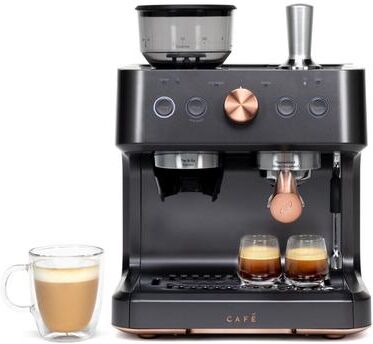
Cafe Café™ BELLISSIMO Semi Automatic Espresso Machine + FrotherFrom grinding your fresh beans to the ideal coarseness to topping your drink with the perfect consistency of foam, the Café Belissimo espresso maker gives you everything you need for delicious coffeehouse drinks at home.579,00 $*Shipping: 0,00 $Secure redirect to the provider
-
Ninja Luxe Café Mini 2-in-1 Espresso and Filter Coffee Machine ES301UKThe Ninja Luxe Café MINI is a compact 2-in-1 coffee machine designed to bring café-style espresso and coffee into your home. It combines grinding, brewing and milk frothing in one convenient system, allowing you to prepare everything from bold espresso to lattes, cappuccinos and filter-style coffee. Barista Assist Technology takes the guesswork out of brewing by automatically recommending the ideal grind size and monitoring the brewing process. With 60 grind size settings, the integrated conical burr grinder provides precise control over how your coffee beans are prepared for each drink. The built-in precision scale provides weight-based dosing for consistent results, while adaptive brewing monitors and adjusts brewing temperature and pressure. You can choose between three coffee strengths and three temperature settings to customise your drink to your preference. A manual steam wand gives you direct control over milk texture, allowing you to create smooth microfoam for a range of drinks. The system is suitable for both dairy and plant-based milk, while the included stainless steel milk jug provides a convenient way to prepare and steam milk. The compact design makes the Luxe Café MINI well suited to kitchens where space is limited. Its 1.3 litre water reservoir and 250 g bean hopper provide useful capacity, while removable dishwasher-safe parts and dedicated cleaning programmes help make everyday maintenance straightforward.366,49 £*Shipping: 0,00 £Secure redirect to the provider
-
Ninja Luxe Café MINI Espresso Machine ES301UK Black/ Stainless Steel Stainless Steel;Black 0LYour café favourites in one compact system: This 2-in-1 espresso and coffee machine features everything you need to grind, brew and froth, with an integrated burr grinder and scale, assisted tamper and stainless steel milk jug. Switch effortlessly between bold espresso and authentic filter coffee, and enjoy coffee shop classics from lattes to cappuccinos. 30% more compact than Ninja Luxe Café Pro: Packed with features, this slim coffee machine includes a 1.3L water reservoir, 250g bean hopper, and easy-to-use control panel with a progress bar. No skills required with Barista Assist Technology: Auto-calibrates grind settings and shot size to deliver the perfect cup for consistently great results, every time. Your microfoam, your way: Use the manual steam wand to create the perfect texture for your drink. Create steamed froth for flat whites, thin froth for lattes, thick froth for cappuccinos, and more. Ninja429,99 £*Shipping: 0,00 £Secure redirect to the provider
-
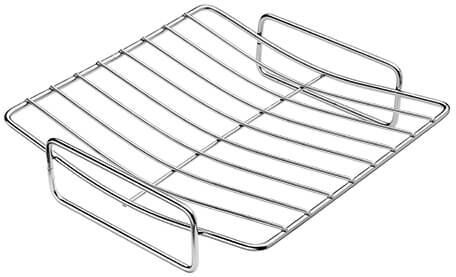
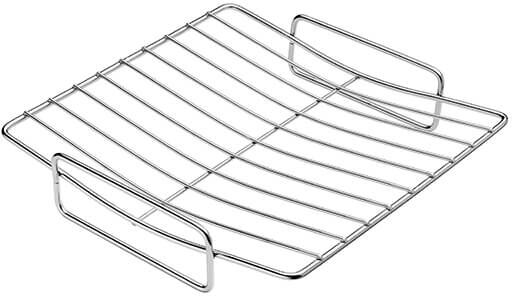
Scanpan TechnIQ Roasting Rack for 28cm Roasting PanDesigned to allow fat to drain away from joints of meat and poultry during cooking, this Scanpan TechnIQ Roasting Rack is designed for use with the Scanpan TechnIQ 28cm Square Roasting Pan. Dimensions: 23.5cm x 23.5cm. The Scanpan TechnIQ 28cm Square Roasting Pan is available to purchase separately, subject to stock.22,50 £*Shipping: 3,50 £Secure redirect to the provider


-
Can you please help me with the isolation and fractionation of chloroplasts for photosynthesis?
Sure! Isolating and fractionating chloroplasts for photosynthesis involves several steps. First, you would need to extract chloroplasts from plant tissue using a buffer solution and a homogenizer. Then, you can use differential centrifugation to separate the chloroplasts from other cellular components based on their size and density. After that, you can use a sucrose density gradient to further purify and fractionate the chloroplasts based on their buoyant density. Finally, you can collect the chloroplast fractions and use them for studying photosynthesis. Keep in mind that this process requires careful handling and precise techniques to ensure the purity and functionality of the isolated chloroplasts. **
-
Can someone tell me the steps of cell fractionation by density gradient centrifugation with explanation?
Cell fractionation by density gradient centrifugation involves several steps: 1. Homogenization: The first step is to break open the cells and release their contents. This is typically done using a homogenizer or sonicator to disrupt the cell membranes. 2. Centrifugation: The homogenized cell suspension is then centrifuged at a low speed to remove large debris and unbroken cells. This step separates the homogenate into different fractions based on size and density. 3. Density gradient formation: A density gradient solution, such as sucrose or cesium chloride, is prepared and layered in a centrifuge tube. The gradient is formed by layering solutions of increasing density from the bottom to the top of the tube. 4. Centrifugation: The cell homogenate is then layered on top of the density gradient and centrifuged at high speeds. During centrifugation, the different cellular components separate based on their density and form distinct bands within the gradient. **
-
Can someone provide me with the steps of cell fractionation by density gradient centrifugation with explanation?
Cell fractionation by density gradient centrifugation involves separating cellular components based on their density. The steps are as follows: 1. Homogenize the cells to break them open and release their contents. 2. Centrifuge the homogenate at low speed to remove large debris and nuclei. 3. Layer the supernatant on top of a density gradient medium in a centrifuge tube. 4. Centrifuge the tube at high speed, causing cellular components to separate based on their density, with heavier components sinking to the bottom and lighter components staying towards the top. 5. Collect the fractions at different density levels and analyze them to isolate specific cellular components. This method allows for the separation of organelles and other cellular components based on their density, providing researchers with purified fractions for further analysis. **
-
How does the smell of coffee develop when grinding coffee beans and brewing coffee?
When grinding coffee beans, the smell of coffee begins to develop as the beans are broken down and their oils are released. This process intensifies as more surface area is exposed to the air. When brewing coffee, the aroma further develops as hot water extracts the flavors and oils from the ground coffee, creating a rich and complex scent that fills the air. The combination of these two processes results in the familiar and enticing smell of freshly brewed coffee. **

What is barista milk?
Barista milk is a type of milk that is specifically designed for use in coffee beverages by baristas. It is usually a higher fat content milk, such as whole milk or a milk alternative like oat or almond milk, that is steamed to create a creamy texture and rich flavor in espresso-based drinks like lattes and cappuccinos. Barista milk is chosen for its ability to create smooth microfoam that enhances the taste and presentation of specialty coffee drinks. **
What is the recipe for brewing sweet mead? Is there a brief, experienced guide and tips for it?
To brew sweet mead, you will need honey, water, and yeast. Start by heating the water and dissolving the honey in it. Once the mixture has cooled, add the yeast and let it ferment for several weeks. To make a sweet mead, you can stop the fermentation process before all the honey is converted to alcohol, leaving some residual sweetness. An experienced guide for brewing sweet mead would include tips such as using high-quality honey for the best flavor, monitoring the fermentation process closely to achieve the desired level of sweetness, and allowing the mead to age for a few months to develop its flavors. It's also important to keep everything clean and sanitized to prevent any unwanted bacteria from affecting the mead. **
Top-Angebote
Products related to Fractionation:
-
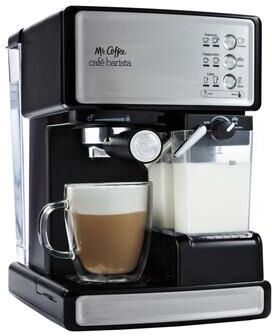
Mr. Coffee® Café BaristaBrew coffeehouse-style drinks just the way you like them right at home. In one simple touch, Mr. Coffee® Café Barista brews espresso coffee with a 15-bar pump system and automatically froths milk into cappuccino and latte selections.239,99 $*Shipping: 0,00 $Secure redirect to the provider
-
Cafe Café™ BELLISSIMO Semi Automatic Espresso Machine + FrotherFrom grinding your fresh beans to the ideal coarseness to topping your drink with the perfect consistency of foam, the Café Belissimo espresso maker gives you everything you need for delicious coffeehouse drinks at home.579,00 $*Shipping: 0,00 $Secure redirect to the provider
-
Ninja Luxe Café Mini 2-in-1 Espresso and Filter Coffee Machine ES301UKThe Ninja Luxe Café MINI is a compact 2-in-1 coffee machine designed to bring café-style espresso and coffee into your home. It combines grinding, brewing and milk frothing in one convenient system, allowing you to prepare everything from bold espresso to lattes, cappuccinos and filter-style coffee. Barista Assist Technology takes the guesswork out of brewing by automatically recommending the ideal grind size and monitoring the brewing process. With 60 grind size settings, the integrated conical burr grinder provides precise control over how your coffee beans are prepared for each drink. The built-in precision scale provides weight-based dosing for consistent results, while adaptive brewing monitors and adjusts brewing temperature and pressure. You can choose between three coffee strengths and three temperature settings to customise your drink to your preference. A manual steam wand gives you direct control over milk texture, allowing you to create smooth microfoam for a range of drinks. The system is suitable for both dairy and plant-based milk, while the included stainless steel milk jug provides a convenient way to prepare and steam milk. The compact design makes the Luxe Café MINI well suited to kitchens where space is limited. Its 1.3 litre water reservoir and 250 g bean hopper provide useful capacity, while removable dishwasher-safe parts and dedicated cleaning programmes help make everyday maintenance straightforward.366,49 £*Shipping: 0,00 £Secure redirect to the provider
-
What is the fractionation method?
Fractionation is a separation process used in various industries to separate a mixture into its individual components based on their different boiling points. This method involves heating the mixture to a specific temperature, causing the components with lower boiling points to vaporize and rise to the top of the fractionating column, while the components with higher boiling points remain in liquid form. The vaporized components are then condensed back into liquid form and collected as separate fractions. This process allows for the isolation of pure components from a complex mixture. **
-
Is the fractionation method the same as the separation method?
The fractionation method is a type of separation method. Fractionation involves separating a mixture into its individual components based on their different physical or chemical properties, such as boiling point, solubility, or molecular size. This process results in the formation of fractions, which are the individual components of the mixture. Therefore, while fractionation is a type of separation method, not all separation methods involve fractionation. **
-
Can you please help me with the isolation and fractionation of chloroplasts for photosynthesis?
Sure! Isolating and fractionating chloroplasts for photosynthesis involves several steps. First, you would need to extract chloroplasts from plant tissue using a buffer solution and a homogenizer. Then, you can use differential centrifugation to separate the chloroplasts from other cellular components based on their size and density. After that, you can use a sucrose density gradient to further purify and fractionate the chloroplasts based on their buoyant density. Finally, you can collect the chloroplast fractions and use them for studying photosynthesis. Keep in mind that this process requires careful handling and precise techniques to ensure the purity and functionality of the isolated chloroplasts. **
-
Can someone tell me the steps of cell fractionation by density gradient centrifugation with explanation?
Cell fractionation by density gradient centrifugation involves several steps: 1. Homogenization: The first step is to break open the cells and release their contents. This is typically done using a homogenizer or sonicator to disrupt the cell membranes. 2. Centrifugation: The homogenized cell suspension is then centrifuged at a low speed to remove large debris and unbroken cells. This step separates the homogenate into different fractions based on size and density. 3. Density gradient formation: A density gradient solution, such as sucrose or cesium chloride, is prepared and layered in a centrifuge tube. The gradient is formed by layering solutions of increasing density from the bottom to the top of the tube. 4. Centrifugation: The cell homogenate is then layered on top of the density gradient and centrifuged at high speeds. During centrifugation, the different cellular components separate based on their density and form distinct bands within the gradient. **
Similar search terms for Fractionation
-
Ninja Luxe Café MINI Espresso Machine ES301UK Black/ Stainless Steel Stainless Steel;Black 0LYour café favourites in one compact system: This 2-in-1 espresso and coffee machine features everything you need to grind, brew and froth, with an integrated burr grinder and scale, assisted tamper and stainless steel milk jug. Switch effortlessly between bold espresso and authentic filter coffee, and enjoy coffee shop classics from lattes to cappuccinos. 30% more compact than Ninja Luxe Café Pro: Packed with features, this slim coffee machine includes a 1.3L water reservoir, 250g bean hopper, and easy-to-use control panel with a progress bar. No skills required with Barista Assist Technology: Auto-calibrates grind settings and shot size to deliver the perfect cup for consistently great results, every time. Your microfoam, your way: Use the manual steam wand to create the perfect texture for your drink. Create steamed froth for flat whites, thin froth for lattes, thick froth for cappuccinos, and more. Ninja429,99 £*Shipping: 0,00 £Secure redirect to the provider
-
Scanpan TechnIQ Roasting Rack for 28cm Roasting PanDesigned to allow fat to drain away from joints of meat and poultry during cooking, this Scanpan TechnIQ Roasting Rack is designed for use with the Scanpan TechnIQ 28cm Square Roasting Pan. Dimensions: 23.5cm x 23.5cm. The Scanpan TechnIQ 28cm Square Roasting Pan is available to purchase separately, subject to stock.22,50 £*Shipping: 3,50 £Secure redirect to the provider
-
Scanpan TechnIQ Roasting Rack for 33cm Roasting PanDesigned to allow fat to drain away from joints of meat and poultry during cooking, this Scanpan TechnIQ Roasting Rack is designed for use with the Scanpan TechnIQ 33cm Square Roasting Pan. Dimensions: 27cm x 27cm. The Scanpan TechnIQ 33cm Square Roasting Pan is available to purchase separately, subject to stock.24,30 £*Shipping: 3,50 £Secure redirect to the provider
-
Philips Barista Brew Semi-Automatic Espresso Machine with Americano, Dual Bean Hopper & Cappuccino SystemImmerse yourself in the artistry of coffee making with the Philips Barista Brew Espresso Machine. Elevate your home barista journey with intuitive guidance, a 280g dual bean container, and a precision-crafted 58mm stainless steel portafilter.699,99 $*Shipping: 0,00 $Secure redirect to the provider
-
Can someone provide me with the steps of cell fractionation by density gradient centrifugation with explanation?
Cell fractionation by density gradient centrifugation involves separating cellular components based on their density. The steps are as follows: 1. Homogenize the cells to break them open and release their contents. 2. Centrifuge the homogenate at low speed to remove large debris and nuclei. 3. Layer the supernatant on top of a density gradient medium in a centrifuge tube. 4. Centrifuge the tube at high speed, causing cellular components to separate based on their density, with heavier components sinking to the bottom and lighter components staying towards the top. 5. Collect the fractions at different density levels and analyze them to isolate specific cellular components. This method allows for the separation of organelles and other cellular components based on their density, providing researchers with purified fractions for further analysis. **
-
How does the smell of coffee develop when grinding coffee beans and brewing coffee?
When grinding coffee beans, the smell of coffee begins to develop as the beans are broken down and their oils are released. This process intensifies as more surface area is exposed to the air. When brewing coffee, the aroma further develops as hot water extracts the flavors and oils from the ground coffee, creating a rich and complex scent that fills the air. The combination of these two processes results in the familiar and enticing smell of freshly brewed coffee. **
-
What is barista milk?
Barista milk is a type of milk that is specifically designed for use in coffee beverages by baristas. It is usually a higher fat content milk, such as whole milk or a milk alternative like oat or almond milk, that is steamed to create a creamy texture and rich flavor in espresso-based drinks like lattes and cappuccinos. Barista milk is chosen for its ability to create smooth microfoam that enhances the taste and presentation of specialty coffee drinks. **
-
What is the recipe for brewing sweet mead? Is there a brief, experienced guide and tips for it?
To brew sweet mead, you will need honey, water, and yeast. Start by heating the water and dissolving the honey in it. Once the mixture has cooled, add the yeast and let it ferment for several weeks. To make a sweet mead, you can stop the fermentation process before all the honey is converted to alcohol, leaving some residual sweetness. An experienced guide for brewing sweet mead would include tips such as using high-quality honey for the best flavor, monitoring the fermentation process closely to achieve the desired level of sweetness, and allowing the mead to age for a few months to develop its flavors. It's also important to keep everything clean and sanitized to prevent any unwanted bacteria from affecting the mead. **
* All prices are inclusive of VAT and, if applicable, plus shipping costs. The offer information is based on the details provided by the respective shop and is updated through automated processes. Real-time updates do not occur, so deviations can occur in individual cases. ** Note: Parts of this content were created by AI.