Buy espresso-guide.com ?
We are moving the project
espresso-guide.com .
Are you interested in purchasing the domain
espresso-guide.com ?
domain@kv-gmbh.de · 0541-91531010
Buy espresso-guide.com ?
How do non-homologous recombination and homologous recombination work?
Non-homologous recombination involves the joining of two DNA molecules at non-homologous sequences, resulting in the insertion, deletion, or rearrangement of genetic material. This process is often error-prone and can lead to mutations. Homologous recombination, on the other hand, involves the exchange of genetic material between two similar DNA molecules, typically occurring during meiosis. This process is important for repairing DNA damage and ensuring genetic diversity. It involves the exchange of genetic material between homologous chromosomes, resulting in the formation of new combinations of genes. **
Are modifications homologous?
Modifications can be homologous if they are derived from a common ancestral modification and have similar functions in different species. For example, the presence of similar modifications in the wings of bats and birds, both of which enable flight, suggests homology. However, modifications can also be analogous, meaning they have similar functions but are not derived from a common ancestor. An example of analogous modifications is the wings of birds and insects, which have different evolutionary origins but serve the same function of flight. **

Similar search terms for Homologous
Top-Angebote
Products related to Homologous:
-
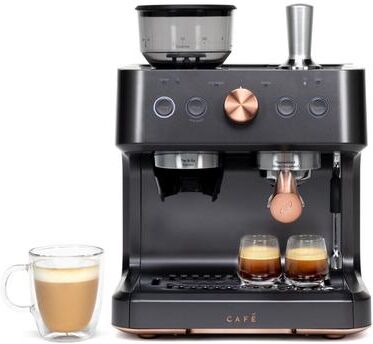
Cafe Café™ BELLISSIMO Semi Automatic Espresso Machine + FrotherFrom grinding your fresh beans to the ideal coarseness to topping your drink with the perfect consistency of foam, the Café Belissimo espresso maker gives you everything you need for delicious coffeehouse drinks at home.579,00 $*Shipping: 0,00 $Secure redirect to the provider
-
Millefiori Rose Espresso aroma oil 15 mlMillefiori Rose Espresso, 15 ml, Essential oils Home Scents, You can change the scent of your home as often as you want to – and Millefiori Rose Espresso scented oil is the perfect product for this task. With only a few drops, the charming and delicate aroma starts getting released into the air and fills every room while caressing your senses. Characteristics: a spicy aroma a sweet aroma How to use: Judge the amount of oil you need by the required intensity of your home fragrance.9,20 £*Shipping: 3,99 £Secure redirect to the provider
-
Ninja Luxe Café Mini 2-in-1 Espresso and Filter Coffee Machine ES301UKThe Ninja Luxe Café MINI is a compact 2-in-1 coffee machine designed to bring café-style espresso and coffee into your home. It combines grinding, brewing and milk frothing in one convenient system, allowing you to prepare everything from bold espresso to lattes, cappuccinos and filter-style coffee. Barista Assist Technology takes the guesswork out of brewing by automatically recommending the ideal grind size and monitoring the brewing process. With 60 grind size settings, the integrated conical burr grinder provides precise control over how your coffee beans are prepared for each drink. The built-in precision scale provides weight-based dosing for consistent results, while adaptive brewing monitors and adjusts brewing temperature and pressure. You can choose between three coffee strengths and three temperature settings to customise your drink to your preference. A manual steam wand gives you direct control over milk texture, allowing you to create smooth microfoam for a range of drinks. The system is suitable for both dairy and plant-based milk, while the included stainless steel milk jug provides a convenient way to prepare and steam milk. The compact design makes the Luxe Café MINI well suited to kitchens where space is limited. Its 1.3 litre water reservoir and 250 g bean hopper provide useful capacity, while removable dishwasher-safe parts and dedicated cleaning programmes help make everyday maintenance straightforward.366,49 £*Shipping: 0,00 £Secure redirect to the provider
-
Ninja Luxe Café MINI Espresso Machine ES301UK Black/ Stainless Steel Stainless Steel;Black 0LYour café favourites in one compact system: This 2-in-1 espresso and coffee machine features everything you need to grind, brew and froth, with an integrated burr grinder and scale, assisted tamper and stainless steel milk jug. Switch effortlessly between bold espresso and authentic filter coffee, and enjoy coffee shop classics from lattes to cappuccinos. 30% more compact than Ninja Luxe Café Pro: Packed with features, this slim coffee machine includes a 1.3L water reservoir, 250g bean hopper, and easy-to-use control panel with a progress bar. No skills required with Barista Assist Technology: Auto-calibrates grind settings and shot size to deliver the perfect cup for consistently great results, every time. Your microfoam, your way: Use the manual steam wand to create the perfect texture for your drink. Create steamed froth for flat whites, thin froth for lattes, thick froth for cappuccinos, and more. Ninja429,99 £*Shipping: 0,00 £Secure redirect to the provider


-
Why are bird feathers homologous?
Bird feathers are homologous because they all share a common evolutionary origin. They are derived from the same structure in the common ancestor of all birds. Despite the variations in size, shape, and color, bird feathers all serve the same fundamental purpose of providing insulation, aiding in flight, and attracting mates. This shared ancestry and function make bird feathers homologous structures. **
-
Can non-homologous chromosomes cross over?
No, non-homologous chromosomes cannot undergo crossing over during meiosis. Crossing over is a process that involves the exchange of genetic material between homologous chromosomes, which are chromosomes that are similar in size, shape, and gene content. Non-homologous chromosomes do not have the necessary similarity in order to undergo crossing over. **
-
Are Maybugs analogous or homologous animals?
Maybugs, also known as cockchafers, are not analogous or homologous to any other animals. They are a unique species of beetle belonging to the family Scarabaeidae. Analogous structures are similar in function but not in structure or evolutionary origin, while homologous structures are similar in structure and evolutionary origin but not necessarily in function. Maybugs do not share these similarities with any other animals, making them a distinct and separate species. **
-
Which homologous organs exist in plants?
Homologous organs in plants are structures that have a common evolutionary origin but may have different functions. Examples of homologous organs in plants include the various types of leaves, such as simple leaves, compound leaves, and scale leaves, which all have a common origin but serve different functions in different plant species. Another example is the different types of flowers, which have a common origin but may have evolved to attract different pollinators or serve different reproductive strategies. Additionally, the various types of stems, such as rhizomes, stolons, and tubers, are also considered homologous organs in plants. **
Are bat wings homologous or analogous?
Bat wings are homologous structures, meaning they share a common evolutionary origin with the wings of other mammals, such as humans and whales. This suggests that bats, humans, and whales all inherited their limb structure from a common ancestor. In contrast, analogous structures are those that have similar functions but different evolutionary origins, such as the wings of birds and insects. **
How do you arrange a homologous series?
To arrange a homologous series, you would start by identifying a common functional group or structural feature that is repeated in each compound. Then, you would organize the compounds in the series based on increasing molecular size or increasing number of repeating units of the functional group. This could involve arranging the compounds in order of increasing carbon chain length, increasing number of double bonds, or increasing number of functional groups. By organizing the compounds in this way, you can easily compare their properties and trends across the series. **
Top-Angebote
Products related to Homologous:
-
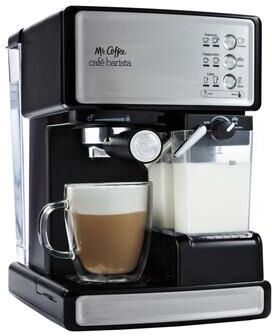
Mr. Coffee® Café BaristaBrew coffeehouse-style drinks just the way you like them right at home. In one simple touch, Mr. Coffee® Café Barista brews espresso coffee with a 15-bar pump system and automatically froths milk into cappuccino and latte selections.239,99 $*Shipping: 0,00 $Secure redirect to the provider
-
Cafe Café™ BELLISSIMO Semi Automatic Espresso Machine + FrotherFrom grinding your fresh beans to the ideal coarseness to topping your drink with the perfect consistency of foam, the Café Belissimo espresso maker gives you everything you need for delicious coffeehouse drinks at home.579,00 $*Shipping: 0,00 $Secure redirect to the provider
-
Millefiori Rose Espresso aroma oil 15 mlMillefiori Rose Espresso, 15 ml, Essential oils Home Scents, You can change the scent of your home as often as you want to – and Millefiori Rose Espresso scented oil is the perfect product for this task. With only a few drops, the charming and delicate aroma starts getting released into the air and fills every room while caressing your senses. Characteristics: a spicy aroma a sweet aroma How to use: Judge the amount of oil you need by the required intensity of your home fragrance.9,20 £*Shipping: 3,99 £Secure redirect to the provider
-
How do non-homologous recombination and homologous recombination work?
Non-homologous recombination involves the joining of two DNA molecules at non-homologous sequences, resulting in the insertion, deletion, or rearrangement of genetic material. This process is often error-prone and can lead to mutations. Homologous recombination, on the other hand, involves the exchange of genetic material between two similar DNA molecules, typically occurring during meiosis. This process is important for repairing DNA damage and ensuring genetic diversity. It involves the exchange of genetic material between homologous chromosomes, resulting in the formation of new combinations of genes. **
-
Are modifications homologous?
Modifications can be homologous if they are derived from a common ancestral modification and have similar functions in different species. For example, the presence of similar modifications in the wings of bats and birds, both of which enable flight, suggests homology. However, modifications can also be analogous, meaning they have similar functions but are not derived from a common ancestor. An example of analogous modifications is the wings of birds and insects, which have different evolutionary origins but serve the same function of flight. **
-
Why are bird feathers homologous?
Bird feathers are homologous because they all share a common evolutionary origin. They are derived from the same structure in the common ancestor of all birds. Despite the variations in size, shape, and color, bird feathers all serve the same fundamental purpose of providing insulation, aiding in flight, and attracting mates. This shared ancestry and function make bird feathers homologous structures. **
-
Can non-homologous chromosomes cross over?
No, non-homologous chromosomes cannot undergo crossing over during meiosis. Crossing over is a process that involves the exchange of genetic material between homologous chromosomes, which are chromosomes that are similar in size, shape, and gene content. Non-homologous chromosomes do not have the necessary similarity in order to undergo crossing over. **
Similar search terms for Homologous
-
Ninja Luxe Café Mini 2-in-1 Espresso and Filter Coffee Machine ES301UKThe Ninja Luxe Café MINI is a compact 2-in-1 coffee machine designed to bring café-style espresso and coffee into your home. It combines grinding, brewing and milk frothing in one convenient system, allowing you to prepare everything from bold espresso to lattes, cappuccinos and filter-style coffee. Barista Assist Technology takes the guesswork out of brewing by automatically recommending the ideal grind size and monitoring the brewing process. With 60 grind size settings, the integrated conical burr grinder provides precise control over how your coffee beans are prepared for each drink. The built-in precision scale provides weight-based dosing for consistent results, while adaptive brewing monitors and adjusts brewing temperature and pressure. You can choose between three coffee strengths and three temperature settings to customise your drink to your preference. A manual steam wand gives you direct control over milk texture, allowing you to create smooth microfoam for a range of drinks. The system is suitable for both dairy and plant-based milk, while the included stainless steel milk jug provides a convenient way to prepare and steam milk. The compact design makes the Luxe Café MINI well suited to kitchens where space is limited. Its 1.3 litre water reservoir and 250 g bean hopper provide useful capacity, while removable dishwasher-safe parts and dedicated cleaning programmes help make everyday maintenance straightforward.366,49 £*Shipping: 0,00 £Secure redirect to the provider
-
Ninja Luxe Café MINI Espresso Machine ES301UK Black/ Stainless Steel Stainless Steel;Black 0LYour café favourites in one compact system: This 2-in-1 espresso and coffee machine features everything you need to grind, brew and froth, with an integrated burr grinder and scale, assisted tamper and stainless steel milk jug. Switch effortlessly between bold espresso and authentic filter coffee, and enjoy coffee shop classics from lattes to cappuccinos. 30% more compact than Ninja Luxe Café Pro: Packed with features, this slim coffee machine includes a 1.3L water reservoir, 250g bean hopper, and easy-to-use control panel with a progress bar. No skills required with Barista Assist Technology: Auto-calibrates grind settings and shot size to deliver the perfect cup for consistently great results, every time. Your microfoam, your way: Use the manual steam wand to create the perfect texture for your drink. Create steamed froth for flat whites, thin froth for lattes, thick froth for cappuccinos, and more. Ninja429,99 £*Shipping: 0,00 £Secure redirect to the provider
-
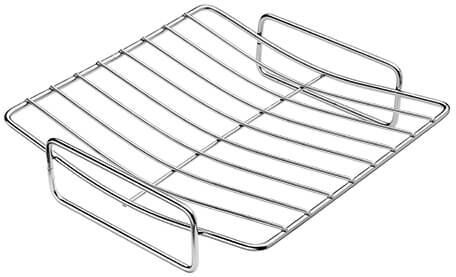
Scanpan TechnIQ Roasting Rack for 28cm Roasting PanDesigned to allow fat to drain away from joints of meat and poultry during cooking, this Scanpan TechnIQ Roasting Rack is designed for use with the Scanpan TechnIQ 28cm Square Roasting Pan. Dimensions: 23.5cm x 23.5cm. The Scanpan TechnIQ 28cm Square Roasting Pan is available to purchase separately, subject to stock.22,50 £*Shipping: 3,50 £Secure redirect to the provider
-
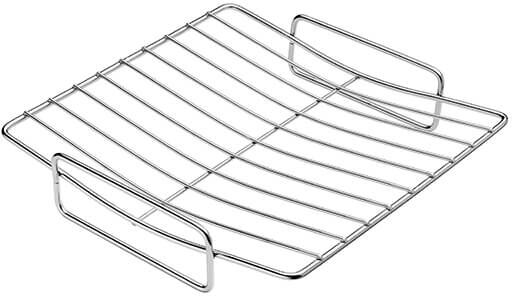
Scanpan TechnIQ Roasting Rack for 33cm Roasting PanDesigned to allow fat to drain away from joints of meat and poultry during cooking, this Scanpan TechnIQ Roasting Rack is designed for use with the Scanpan TechnIQ 33cm Square Roasting Pan. Dimensions: 27cm x 27cm. The Scanpan TechnIQ 33cm Square Roasting Pan is available to purchase separately, subject to stock.24,30 £*Shipping: 3,50 £Secure redirect to the provider
-
Are Maybugs analogous or homologous animals?
Maybugs, also known as cockchafers, are not analogous or homologous to any other animals. They are a unique species of beetle belonging to the family Scarabaeidae. Analogous structures are similar in function but not in structure or evolutionary origin, while homologous structures are similar in structure and evolutionary origin but not necessarily in function. Maybugs do not share these similarities with any other animals, making them a distinct and separate species. **
-
Which homologous organs exist in plants?
Homologous organs in plants are structures that have a common evolutionary origin but may have different functions. Examples of homologous organs in plants include the various types of leaves, such as simple leaves, compound leaves, and scale leaves, which all have a common origin but serve different functions in different plant species. Another example is the different types of flowers, which have a common origin but may have evolved to attract different pollinators or serve different reproductive strategies. Additionally, the various types of stems, such as rhizomes, stolons, and tubers, are also considered homologous organs in plants. **
-
Are bat wings homologous or analogous?
Bat wings are homologous structures, meaning they share a common evolutionary origin with the wings of other mammals, such as humans and whales. This suggests that bats, humans, and whales all inherited their limb structure from a common ancestor. In contrast, analogous structures are those that have similar functions but different evolutionary origins, such as the wings of birds and insects. **
-
How do you arrange a homologous series?
To arrange a homologous series, you would start by identifying a common functional group or structural feature that is repeated in each compound. Then, you would organize the compounds in the series based on increasing molecular size or increasing number of repeating units of the functional group. This could involve arranging the compounds in order of increasing carbon chain length, increasing number of double bonds, or increasing number of functional groups. By organizing the compounds in this way, you can easily compare their properties and trends across the series. **
* All prices are inclusive of VAT and, if applicable, plus shipping costs. The offer information is based on the details provided by the respective shop and is updated through automated processes. Real-time updates do not occur, so deviations can occur in individual cases. ** Note: Parts of this content were created by AI.