Buy espresso-guide.com ?
We are moving the project
espresso-guide.com .
Are you interested in purchasing the domain
espresso-guide.com ?
domain@kv-gmbh.de · 0541-91531010
Buy espresso-guide.com ?
'Salts or molecules?'
Salts are compounds formed from the reaction of an acid and a base, while molecules are made up of atoms bonded together. Salts are ionic compounds, meaning they are made up of ions, while molecules can be either ionic or covalent compounds. Salts have a specific crystalline structure and are often soluble in water, while molecules can have a wide range of physical properties and solubilities. Overall, salts and molecules are distinct types of chemical compounds with different structures and properties. **
Which of the following molecules are dipole molecules and why?
Molecules that have a dipole moment are considered dipole molecules. A dipole moment occurs when there is an uneven distribution of electron density within a molecule, resulting in a partial positive and partial negative charge. For example, molecules like water (H2O) and ammonia (NH3) are dipole molecules because of their polar covalent bonds, which create a separation of charge within the molecule. On the other hand, molecules like carbon dioxide (CO2) and methane (CH4) are nonpolar and do not have a dipole moment because the electronegativity of the atoms cancel each other out, resulting in a symmetrical distribution of charge. **

Similar search terms for Molecules
Top-Angebote
Products related to Molecules:
-
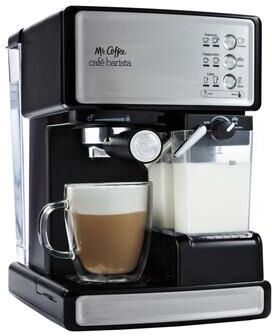
Mr. Coffee® Café BaristaBrew coffeehouse-style drinks just the way you like them right at home. In one simple touch, Mr. Coffee® Café Barista brews espresso coffee with a 15-bar pump system and automatically froths milk into cappuccino and latte selections.239,99 $*Shipping: 0,00 $Secure redirect to the provider
-
Cafe Café™ BELLISSIMO Semi Automatic Espresso Machine + FrotherFrom grinding your fresh beans to the ideal coarseness to topping your drink with the perfect consistency of foam, the Café Belissimo espresso maker gives you everything you need for delicious coffeehouse drinks at home.579,00 $*Shipping: 0,00 $Secure redirect to the provider
-
Ninja Luxe Café Mini 2-in-1 Espresso and Filter Coffee Machine ES301UKThe Ninja Luxe Café MINI is a compact 2-in-1 coffee machine designed to bring café-style espresso and coffee into your home. It combines grinding, brewing and milk frothing in one convenient system, allowing you to prepare everything from bold espresso to lattes, cappuccinos and filter-style coffee. Barista Assist Technology takes the guesswork out of brewing by automatically recommending the ideal grind size and monitoring the brewing process. With 60 grind size settings, the integrated conical burr grinder provides precise control over how your coffee beans are prepared for each drink. The built-in precision scale provides weight-based dosing for consistent results, while adaptive brewing monitors and adjusts brewing temperature and pressure. You can choose between three coffee strengths and three temperature settings to customise your drink to your preference. A manual steam wand gives you direct control over milk texture, allowing you to create smooth microfoam for a range of drinks. The system is suitable for both dairy and plant-based milk, while the included stainless steel milk jug provides a convenient way to prepare and steam milk. The compact design makes the Luxe Café MINI well suited to kitchens where space is limited. Its 1.3 litre water reservoir and 250 g bean hopper provide useful capacity, while removable dishwasher-safe parts and dedicated cleaning programmes help make everyday maintenance straightforward.366,49 £*Shipping: 0,00 £Secure redirect to the provider


-
What is the difference between compound molecules and element molecules?
Compound molecules are made up of two or more different elements chemically bonded together, such as water (H2O) or carbon dioxide (CO2). Element molecules, on the other hand, are made up of two or more atoms of the same element bonded together, such as oxygen (O2) or nitrogen (N2). In compound molecules, the atoms are different, while in element molecules, the atoms are the same. **
-
Why are water molecules permanent dipoles and carbon dioxide molecules not?
Water molecules are permanent dipoles because they have a bent molecular shape with unequal sharing of electrons between the oxygen and hydrogen atoms. This results in a partial negative charge on the oxygen atom and partial positive charges on the hydrogen atoms, creating a permanent dipole moment. On the other hand, carbon dioxide molecules are not permanent dipoles because they have a linear molecular shape with symmetrical distribution of the two oxygen atoms and the carbon atom. This results in equal sharing of electrons and no permanent dipole moment. **
-
Why do heptan-1-ol molecules and water molecules not mix?
Heptan-1-ol molecules and water molecules do not mix well because heptan-1-ol is a nonpolar molecule, while water is a polar molecule. Nonpolar molecules are not attracted to polar molecules, so they do not easily mix. Additionally, heptan-1-ol is hydrophobic, meaning it repels water, further preventing the two substances from mixing. This is due to the difference in the polarity and intermolecular forces between the two substances. **
-
How are molecules recognized?
Molecules are recognized through specific interactions between their chemical structures and complementary binding sites on other molecules. This recognition process involves the formation of non-covalent bonds such as hydrogen bonds, van der Waals forces, and electrostatic interactions. The shape, size, and charge distribution of molecules play a crucial role in determining their recognition by other molecules. Additionally, specific functional groups and chemical properties can also contribute to the recognition process. **

How are molecules formed?
Molecules are formed through chemical bonding between atoms. Atoms can either share electrons to form covalent bonds or transfer electrons to form ionic bonds. The type of bonding that occurs depends on the elements involved and their tendency to gain, lose, or share electrons. Once atoms are bonded together, they form a stable structure known as a molecule. **
Search for dipole molecules.
Dipole molecules are molecules that have a separation of positive and negative charges within the molecule. This separation creates a dipole moment, which results in the molecule having a positive end and a negative end. Examples of dipole molecules include water (H2O), hydrogen chloride (HCl), and ammonia (NH3). These molecules are important in various chemical reactions and interactions due to their polar nature. **
Top-Angebote
Products related to Molecules:
-
Bielenda Beauty Molecules moisturising cleansing gel 195 gBielenda Beauty Molecules, 195 g, Cleansing for Women, Before you start your regular skincare routine, it is very important to prepare your skin with a thorough cleansing - without it, the following beauty care routine would not be nearly as effective. The BielendaBeauty Molecules cleanser helps to remove all the impurities that have settled on the skin and in the pores throughout the day or overnight, leaving the skin perfectly clean and ready for any further skin treatments. Characteristics: washes the whole face gently and thoroughly hydrates deeply refreshes pleasantly How to use: Apply in the morning and/or evening to a damp face and lather. Then rinse off.6,30 £*Shipping: 3,99 £Secure redirect to the provider
-
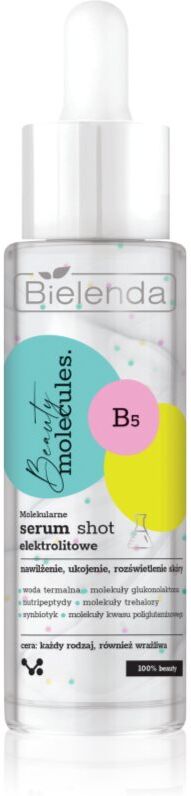
Bielenda Beauty Molecules soothing and moisturising serum 30 gBielenda Beauty Molecules, 30 g, Skin Serums for Women, Does it feel as though your skin needs something more than just the care provided by a cream? The Bielenda Beauty Molecules facial serum is the perfect product to enrich your skincare routine – it pampers the skin and delivers an intensive treatment. With its high concentration of active ingredients, the effect it has on your skin is far more pronounced and faster than with a face cream. Its liquid consistency makes application easier, as it is absorbed into the skin very well. Characteristics: hydrates and nourishes effectively brightens restores skin elasticity restores freshness and youthful beauty to your skin Ingredients: contains a minimum of 90% ingredients of natural origin How to use: Dab an appropriate amount of the serum gently into clean skin with your fingertips. Apply to the face, neck and chest.7,00 £*Shipping: 3,99 £Secure redirect to the provider
-
Mr. Coffee® Café BaristaBrew coffeehouse-style drinks just the way you like them right at home. In one simple touch, Mr. Coffee® Café Barista brews espresso coffee with a 15-bar pump system and automatically froths milk into cappuccino and latte selections.239,99 $*Shipping: 0,00 $Secure redirect to the provider
-
'Salts or molecules?'
Salts are compounds formed from the reaction of an acid and a base, while molecules are made up of atoms bonded together. Salts are ionic compounds, meaning they are made up of ions, while molecules can be either ionic or covalent compounds. Salts have a specific crystalline structure and are often soluble in water, while molecules can have a wide range of physical properties and solubilities. Overall, salts and molecules are distinct types of chemical compounds with different structures and properties. **
-
Which of the following molecules are dipole molecules and why?
Molecules that have a dipole moment are considered dipole molecules. A dipole moment occurs when there is an uneven distribution of electron density within a molecule, resulting in a partial positive and partial negative charge. For example, molecules like water (H2O) and ammonia (NH3) are dipole molecules because of their polar covalent bonds, which create a separation of charge within the molecule. On the other hand, molecules like carbon dioxide (CO2) and methane (CH4) are nonpolar and do not have a dipole moment because the electronegativity of the atoms cancel each other out, resulting in a symmetrical distribution of charge. **
-
What is the difference between compound molecules and element molecules?
Compound molecules are made up of two or more different elements chemically bonded together, such as water (H2O) or carbon dioxide (CO2). Element molecules, on the other hand, are made up of two or more atoms of the same element bonded together, such as oxygen (O2) or nitrogen (N2). In compound molecules, the atoms are different, while in element molecules, the atoms are the same. **
-
Why are water molecules permanent dipoles and carbon dioxide molecules not?
Water molecules are permanent dipoles because they have a bent molecular shape with unequal sharing of electrons between the oxygen and hydrogen atoms. This results in a partial negative charge on the oxygen atom and partial positive charges on the hydrogen atoms, creating a permanent dipole moment. On the other hand, carbon dioxide molecules are not permanent dipoles because they have a linear molecular shape with symmetrical distribution of the two oxygen atoms and the carbon atom. This results in equal sharing of electrons and no permanent dipole moment. **
Similar search terms for Molecules
-
Cafe Café™ BELLISSIMO Semi Automatic Espresso Machine + FrotherFrom grinding your fresh beans to the ideal coarseness to topping your drink with the perfect consistency of foam, the Café Belissimo espresso maker gives you everything you need for delicious coffeehouse drinks at home.579,00 $*Shipping: 0,00 $Secure redirect to the provider
-
Ninja Luxe Café Mini 2-in-1 Espresso and Filter Coffee Machine ES301UKThe Ninja Luxe Café MINI is a compact 2-in-1 coffee machine designed to bring café-style espresso and coffee into your home. It combines grinding, brewing and milk frothing in one convenient system, allowing you to prepare everything from bold espresso to lattes, cappuccinos and filter-style coffee. Barista Assist Technology takes the guesswork out of brewing by automatically recommending the ideal grind size and monitoring the brewing process. With 60 grind size settings, the integrated conical burr grinder provides precise control over how your coffee beans are prepared for each drink. The built-in precision scale provides weight-based dosing for consistent results, while adaptive brewing monitors and adjusts brewing temperature and pressure. You can choose between three coffee strengths and three temperature settings to customise your drink to your preference. A manual steam wand gives you direct control over milk texture, allowing you to create smooth microfoam for a range of drinks. The system is suitable for both dairy and plant-based milk, while the included stainless steel milk jug provides a convenient way to prepare and steam milk. The compact design makes the Luxe Café MINI well suited to kitchens where space is limited. Its 1.3 litre water reservoir and 250 g bean hopper provide useful capacity, while removable dishwasher-safe parts and dedicated cleaning programmes help make everyday maintenance straightforward.366,49 £*Shipping: 0,00 £Secure redirect to the provider
-
Ninja Luxe Café MINI Espresso Machine ES301UK Black/ Stainless Steel Stainless Steel;Black 0LYour café favourites in one compact system: This 2-in-1 espresso and coffee machine features everything you need to grind, brew and froth, with an integrated burr grinder and scale, assisted tamper and stainless steel milk jug. Switch effortlessly between bold espresso and authentic filter coffee, and enjoy coffee shop classics from lattes to cappuccinos. 30% more compact than Ninja Luxe Café Pro: Packed with features, this slim coffee machine includes a 1.3L water reservoir, 250g bean hopper, and easy-to-use control panel with a progress bar. No skills required with Barista Assist Technology: Auto-calibrates grind settings and shot size to deliver the perfect cup for consistently great results, every time. Your microfoam, your way: Use the manual steam wand to create the perfect texture for your drink. Create steamed froth for flat whites, thin froth for lattes, thick froth for cappuccinos, and more. Ninja429,99 £*Shipping: 0,00 £Secure redirect to the provider
-
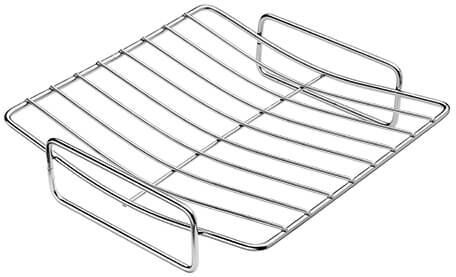
Scanpan TechnIQ Roasting Rack for 28cm Roasting PanDesigned to allow fat to drain away from joints of meat and poultry during cooking, this Scanpan TechnIQ Roasting Rack is designed for use with the Scanpan TechnIQ 28cm Square Roasting Pan. Dimensions: 23.5cm x 23.5cm. The Scanpan TechnIQ 28cm Square Roasting Pan is available to purchase separately, subject to stock.22,50 £*Shipping: 3,50 £Secure redirect to the provider
-
Why do heptan-1-ol molecules and water molecules not mix?
Heptan-1-ol molecules and water molecules do not mix well because heptan-1-ol is a nonpolar molecule, while water is a polar molecule. Nonpolar molecules are not attracted to polar molecules, so they do not easily mix. Additionally, heptan-1-ol is hydrophobic, meaning it repels water, further preventing the two substances from mixing. This is due to the difference in the polarity and intermolecular forces between the two substances. **
-
How are molecules recognized?
Molecules are recognized through specific interactions between their chemical structures and complementary binding sites on other molecules. This recognition process involves the formation of non-covalent bonds such as hydrogen bonds, van der Waals forces, and electrostatic interactions. The shape, size, and charge distribution of molecules play a crucial role in determining their recognition by other molecules. Additionally, specific functional groups and chemical properties can also contribute to the recognition process. **
-
How are molecules formed?
Molecules are formed through chemical bonding between atoms. Atoms can either share electrons to form covalent bonds or transfer electrons to form ionic bonds. The type of bonding that occurs depends on the elements involved and their tendency to gain, lose, or share electrons. Once atoms are bonded together, they form a stable structure known as a molecule. **
-
Search for dipole molecules.
Dipole molecules are molecules that have a separation of positive and negative charges within the molecule. This separation creates a dipole moment, which results in the molecule having a positive end and a negative end. Examples of dipole molecules include water (H2O), hydrogen chloride (HCl), and ammonia (NH3). These molecules are important in various chemical reactions and interactions due to their polar nature. **
* All prices are inclusive of VAT and, if applicable, plus shipping costs. The offer information is based on the details provided by the respective shop and is updated through automated processes. Real-time updates do not occur, so deviations can occur in individual cases. ** Note: Parts of this content were created by AI.